
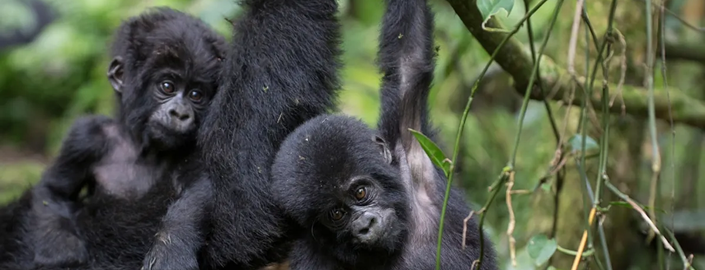
Newborn Twin Gorillas Bring Hope in Virunga National Park
A very special event has taken place in Virunga National Park in eastern Congo. A mother mountain gorilla has given birth to twins one male and one female in the Baraka family group. This family now has 19 gorillas living in the high mountain forests.
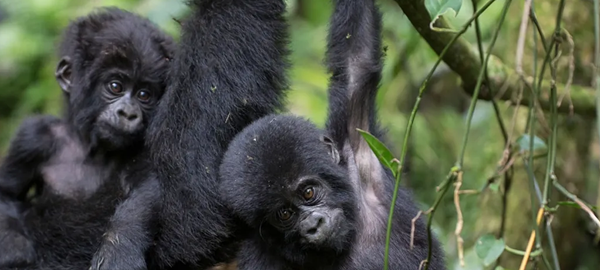
Twin births are extremely rare among mountain gorillas. They happen in less than 1% of cases. This new pair was discovered just two months after another set of twins was born in the same park. The news has filled rangers and conservation teams with joy and hope.
Rangers are carefully watching the newborns. The first few months of life are the hardest for baby gorillas. Raising twins is extra difficult for the mother because she must feed, carry, and protect two babies at once.
This is the second set of twins in a short time. In January 2026, a female gorilla named Mafuko gave birth to twin males in the Bageni family. Those babies are now about 11 weeks old and are doing well. Rangers have seen strong teamwork in the group. A young male gorilla, known as a blackback, stays close to Mafuko to help protect and support her and the infants.
Jacques Katutu, a conservation worker, said seeing two sets of twins within three months is very unusual. He believes it shows that conservation efforts are working well, even with the challenges of insecurity in the area.
More about Mountain Gorillas
Mountain gorillas are gentle giants and very social animals. They live in family groups called troops, usually led by a strong adult male known as a silverback. A typical group has one silverback, several adult females, and their babies. Some groups also have younger males called blackbacks.
The silverback is the leader. He makes decisions, protects the group from danger, and settles fights. Gorillas show strong family bonds. They groom each other, play, and help care for the young ones. At night, they build simple nests from leaves and branches to sleep in — some on the ground and some in trees.
Mountain gorillas eat mostly leaves, stems, fruits, and flowers. They are peaceful animals but can be very strong when they need to defend their family.
These gorillas are found only in two places in the world: the Virunga Mountains (shared by Congo, Rwanda, and Uganda) and Bwindi Impenetrable National Park in south-western Uganda.
How Gorilla Trekking Works
Many people dream of seeing mountain gorillas up close. This is possible through gorilla trekking (also called gorilla tracking).
You must first buy an official permit. Only a small number of people are allowed each day to protect the gorillas.
Groups are small usually a maximum of 8 visitors per gorilla family.
You start early in the morning from the park headquarters with experienced rangers and trackers.
Trackers go ahead to find the gorillas. Then they guide your small group through the forest.
The trek can take 1 to 3 hours or more, depending on where the gorillas are. It often involves walking up steep, muddy slopes through thick jungle. Good walking boots, long clothes, and a raincoat are important.
Once you reach the gorillas, you can spend only one hour with them. You must stay at least 7 metres away, stay quiet, and follow all instructions from the rangers.
Trekking is not easy, but it is a once-in-a-lifetime experience. It helps support conservation and the local communities.
Good News for Conservation
From the 1970s, when fewer than 250 mountain gorillas remained, their population has grown to more than 1,000 today. Their status has improved from “critically endangered” to “endangered.”
This success comes from the hard work of rangers, Gorilla Doctors, and support from organizations like the European Union and UNESCO. They help treat injured gorillas, fight poaching, and monitor the animals daily.
However, the work is still dangerous. More than 220 rangers have lost their lives in the past 20 years while protecting the park from armed groups and other threats.
These rare twin births are a wonderful sign. They show that the gorillas are healthy and that years of protection are paying off. With continued care and support, there is real hope for the future of these amazing animals.