
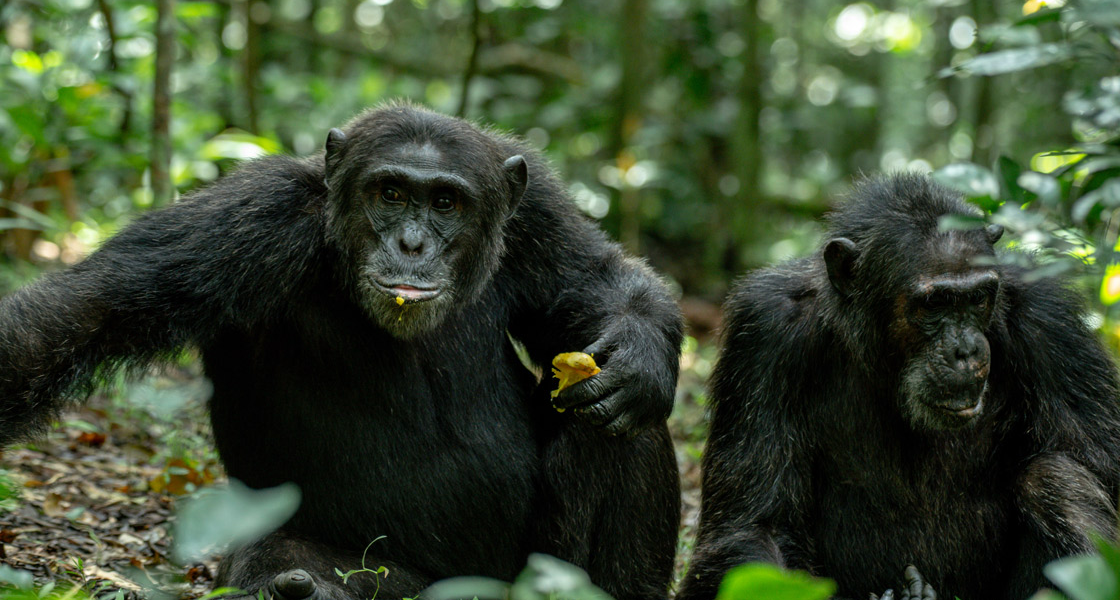
Chimpanzees Turn Against Each Other in Uganda’s Kibale Forest
Deep inside Kibale National Park, something unusual and disturbing has been unfolding among one of the world’s most studied chimpanzee communities. A group that once lived peacefully together has broken apart and turned violent, with members now attacking and killing each other in what scientists describe as a long-running internal conflict.
For visitors and researchers alike, chimpanzees are often seen as intelligent, social, and closely bonded animals. But this new research shows a different side one that is intense, territorial, and sometimes deadly.
From Close Friends to Fierce Enemies
The chimpanzees at Ngogo were once known for their unity. This community, the largest known group of wild chimpanzees, had nearly 200 individuals living together. They shared food, groomed one another, and even held hands a strong sign of social bonding.
Over time, researchers divided them into two subgroups: the Western group and the Central group. Despite this separation, they still functioned as one big community and interacted regularly without serious conflict.
That peaceful coexistence began to change around 2015.
According to Aaron Sandel, a lead researcher from the University of Texas, the first signs of tension appeared when members of the Western group suddenly fled from the Central group and were chased away.
At first, this behavior did not seem too alarming. Chimpanzees often argue, scream, and chase each other during disagreements. Normally, they calm down later and return to grooming and cooperation.
But this time, things were different.
Growing Distance and Rising Tension
After the 2015 incident, the two groups began avoiding each other for weeks at a time. When they did meet, the encounters were more aggressive than before.
What started as occasional tension slowly grew into a deeper divide. By 2018, the split became permanent. The once-united Ngogo chimpanzees had now formed two separate communities.
Soon after, violence followed.
Members of the Western group began carrying out organized attacks on the Central group. These were not random fights but targeted assaults, often resulting in death.
Deadly Conflict
Since the full split in 2018, researchers have recorded at least 24 killings. Among the victims were seven adult males and 17 infants from the Central group. Scientists believe the real number could be even higher, as not all incidents are witnessed.
The killings are especially shocking because many of these chimpanzees once lived side by side peacefully. Individuals that had shared food, rested together, and protected one another are now enemies.
This level of violence within a single chimpanzee community is rare and has raised many questions among scientists.
What Caused the Breakup?
Researchers are still trying to fully understand why this conflict started, but several key events may have played a role.
In 2014, several adult chimpanzees died unexpectedly, including strong males and one female. These individuals may have helped keep the group united. Their loss could have weakened relationships and trust between members.
A new alpha male took over leadership in 2015. In chimpanzee societies, leadership changes can lead to instability. New leaders may bring different alliances, causing tension and competition.
Disease Outbreak
In 2017, a serious respiratory disease killed around 25 chimpanzees. Among the dead were key individuals who had strong connections across both subgroups. Their absence may have removed the last links holding the community together.
Competition and Survival Pressures
Beyond these events, other natural factors could have increased conflict. As the group grew larger, competition for food, space, and mating opportunities likely became more intense.
Male chimpanzees, in particular, often compete for dominance and the chance to reproduce. This competition can lead to aggression, especially when group structures change.
Chimpanzees are also highly territorial animals. They tend to distrust outsiders, and once the two groups fully separated, they may have started seeing each other as rivals rather than family.
What This Means for Humans
Scientists say this situation offers an important lesson for understanding human conflict.
Chimpanzees share much of their DNA with humans, and their social behavior can sometimes mirror our own. The Ngogo conflict shows how quickly relationships can change when groups divide.
According to researchers, the chimpanzees did not need differences in religion, politics, or culture to turn against each other. Simple group identity “us versus them” was enough.
Another expert, James Brooks from the German Primate Center, said this should serve as a warning. Group divisions, even among intelligent and social beings, can lead to serious consequences.
Powerful Reminder from the Wild
The events at Ngogo are still ongoing, and researchers continue to monitor the situation closely. What was once a symbol of cooperation among chimpanzees has now become a striking example of conflict and division.
For those who visit Kibale National Park, the forest remains a place of beauty and wonder. But hidden within it is a story that challenges how we understand both animals and ourselves.
It reminds us that peace within any group whether chimpanzees or humans depends on strong relationships, stability, and cooperation. Once those bonds weaken, even the closest communities can fall apart.