
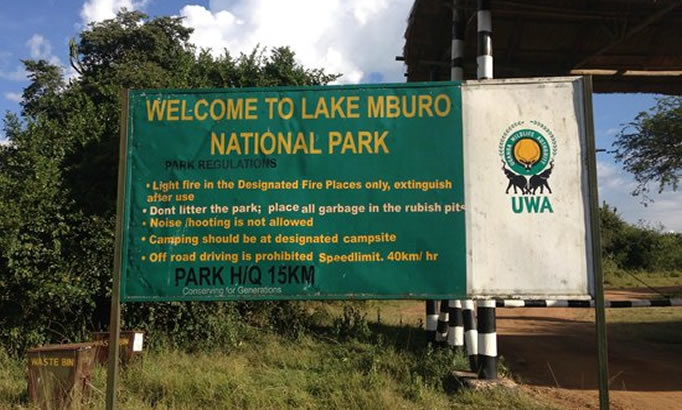
Lake Mburo National Park
Lake Mburo National Park carries a rich and complex history that stretches from ancient legend to modern conservation success. According to local oral tradition, the lake was formed after a tragedy between two brothers Kigarama and Mburo. When Kigarama dreamed of a coming flood and moved to higher ground, Mburo ignored the warning and remained in the valley. Days later, the valley was submerged, forming the lake that today bears Mburo’s name.
For centuries, the area was valued by the Bahima pastoralists as “Karo Karungyi,” meaning good grazing land. However, tsetse fly infestations and royal restrictions by the Omugabe of Ankole limited cattle grazing. The region later suffered greatly during the rinderpest epidemic of the 1890s, which decimated livestock and caused famine. With decreased human activity, the bushland returned and tsetse flies multiplied, pushing communities to resettle elsewhere.
In 1935, the colonial government designated Mburo as a Controlled Hunting Area, allowing limited human activity and regulated hunting. But the 1940s and 1950s saw extreme tsetse eradication campaigns that led to widespread destruction of wildlife and vegetation. Though the flies were eventually reduced, the environment suffered significant damage.
During the 1960s, pastoralists returned, prompting the government to reclassify part of the area as the Lake Mburo Game Reserve in 1964 to protect surviving wildlife. Yet, in the following decade, sections of the land were converted into cattle ranches, poaching escalated, and lions were hunted to extinction.
In 1983, Lake Mburo was declared a National Park, but thousands of residents were evicted without compensation, causing deep resentment among local communities. The turmoil of the 1980s civil war worsened the situation as the park was resettled and wildlife depleted once more.
A turning point came in 1991 with the creation of the Mburo Community Conservation Unit, supported by the African Wildlife Foundation. This initiative introduced community involvement in park management and shared benefits from tourism. Since then, 20% of park entrance revenue has supported local schools, clinics, and community projects.
Today, Lake Mburo National Park stands as a symbol of resilience a restored ecosystem where wildlife and communities now coexist, sharing the benefits of conservation and tourism.
Found away in the rolling hills of western Uganda, Lake Mburo National Park is a peaceful sanctuary that offers a unique blend of wildlife, scenery, and adventure. Although smaller than Uganda’s more famous parks like Murchison Falls or Queen Elizabeth, Lake Mburo possesses a charm that lies in its intimacy. It’s a place where nature feels close and real where you can walk, ride, or drive among zebras, impalas, buffaloes, and elands, and where every sunrise reveals a fresh story of Africa’s wild beauty.
For travelers seeking an adventurous safari, this park is a must-visit. Covering about 260 square kilometers, it is Uganda’s smallest savannah park, yet its diversity of habitats from open acacia woodland to wetland and rolling grassland supports an incredible variety of wildlife and bird species. Located conveniently along the highway connecting Kampala to Mbarara, it is the perfect stopover for travelers heading to or from the gorilla highlands of Bwindi Impenetrable Forest.
| Park Location | Nyabushozi County, Kiruhura District |
|---|---|
| Distance from Kampala | 228 kilometers (about 3 ½ hours). From Kampala |
| Entrance Fees | USD$40 |
| Park Size | 370 km2 |
| Altitude | 1,220m - 1,828m above sea level |